

Comparing Montessori Education with Traditional Schooling
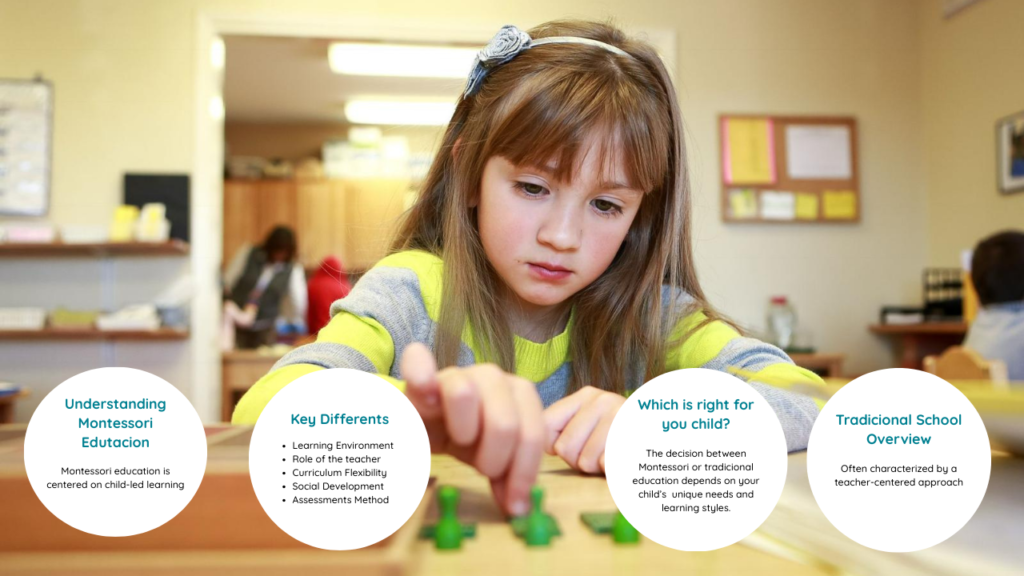
When it comes to your child’s education, making the right choice is crucial. With various educational models available, parents often find themselves debating between Montessori education and traditional schooling. In this article, we will explore the key differences between these two approaches to help you make an informed decision.
1. Understanding Montessori Education
Montessori education is centered around child-led learning. It encourages independence, creativity, and critical thinking by allowing children to explore and learn at their own pace. Developed by Dr. Maria Montessori over a century ago, this educational approach has gained global recognition for its emphasis on holistic development.
2. Traditional Schooling Overview
Traditional schooling, often characterized by a teacher-centered approach, follows a structured curriculum with set guidelines for each grade level. The focus is primarily on academic achievement, standardized testing, and adherence to a fixed schedule.
3. Key Differences Between Montessori and Traditional Schooling
Foundation of the Method: The foundation of the Montessori approach to education is what Dr. Montessori defined as the Four Planes of Development.
Each plane is associated with characteristics that inform how the adults can best prepare an environment for optimal learning. It is a framework to describe ho humans develop from birth to maturity, and each plane or stage, builds up on the foundation of the previous one.
Learning Environment: Montessori classrooms are designed to be interactive and engaging, with materials that encourage exploration. They promote lively and purposeful engagement in both indoor and outdoor settings. Activities promote targeted, age-appropriate skills. In contrast, traditional classrooms often rely on textbooks and lectures as primary teaching methods.
Role of the Teacher: In Montessori schools, children are recognized as natural learners driven by curiosity and desire to explore. Montessori education promotes self-directed learning. Instead of relying on teacher-led instruction, children in Montessori classrooms explore hands-on materials that allow them to discover concepts at their own pace. Teachers act as guides, facilitating learning rather than directing it. Traditional schooling often involves a more authoritative teaching style, where the teacher leads the instruction and students follow.
Curriculum Flexibility: Through careful observation teachers in Montessori build a deeper understanding of each child's needs, strengths, and progress, enabling them to provide tailored guidance within a flexible curriculum. Traditional schooling typically follows a rigid curriculum with little room for deviation.
Social Development: Montessori education emphasizes collaboration and mixed-age groupings within a three-year range. This structure encourages peer learning, with older children acting as mentors. It helps develop social skills, confidence, leadership abilities, empathy, and a sense of community. In contrast, traditional schools typically group children by age and focus more on individual achievement.
Assessment Methods: Montessori schools assess students through observation and portfolio work, focusing on the child’s overall development. Traditional schools rely heavily on
standardized tests and grades to measure academic success.
4. Benefits of Montessori Education
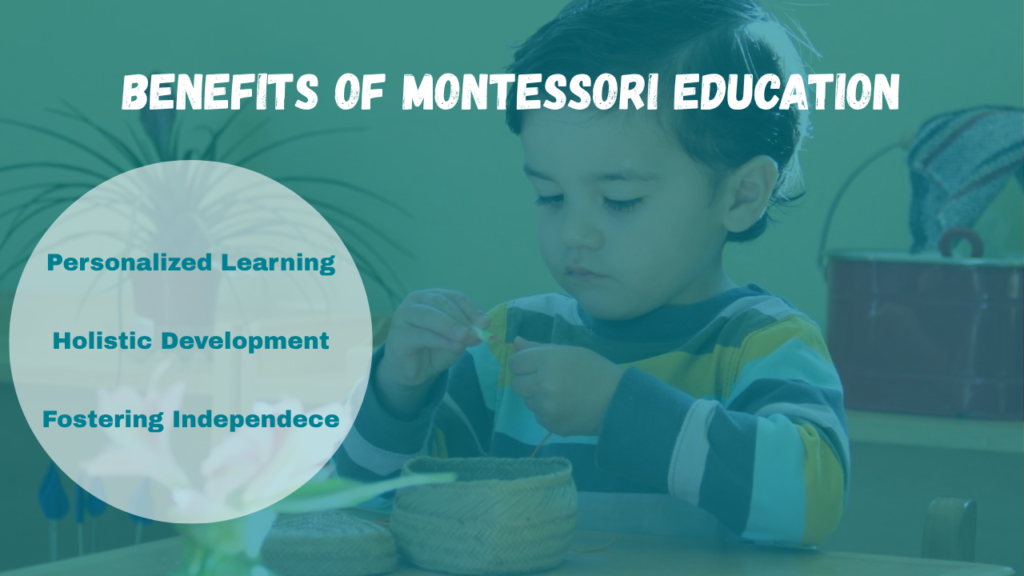
Personalized Learning: Children learn at their own pace, ensuring they fully grasp concepts before moving on.
Fostering Independence: Montessori encourages self-discipline and independent problem-solving.
Holistic Development: The Montessori method nurtures emotional, social, and intellectual growth.
5. Which Is Right for Your Child
The decision between Montessori and traditional schooling depends on your child’s unique needs and learning style. If you value a child-centered, flexible approach that fosters independence, critical thinking and creativity, Montessori may be the ideal choice. However, if you prefer a structured environment with a focus on academic achievement, traditional schooling might be more suitable.
Both Montessori and traditional schooling have their merits, but the best choice ultimately depends on what you believe will best support your child’s development. By understanding the differences between these educational models, you can make a more informed decision that aligns with your child’s needs, educational values and long term parenting goals.
